
Written by Chris Petrawski, President, Bedford Advertising.
The Fed just raised rates for the first time since 2023, setting its new target range at 3.75% to 4% (Car Dealership Guy). Car loans were already expensive before the announcement. Cox Automotive data showed average rates of 9.78% for new and 13.99% for used.
Every store in your market is about to feel this. Some will barely notice. The difference comes down to one question: what is your advertising asking buyers to choose you for?
What a rate hike does to your showroom
When borrowing costs climb, buyers react in two ways.
Some step out of the market. The payment that worked last spring fails today, so they keep driving what they have.
Others wait. They assume prices will come down if they hold off a few months, so they stop shopping and start watching.
Either way, fewer buyers are actively shopping. The ones still in market are more cautious than they were a month ago. If you want to see how quickly buyer volume can swing in a single market, our Texas Market Review for September 2026 tracks it month by month.
What happened the last time rates climbed
The Fed’s last rate hike cycle ended in 2023. It provides the best preview dealers have of what comes next.
Sales hit a ceiling. With inventory recovering, 2023 beat the supply-starved 2022 and finished near 15.5 million units. This remained well below the market’s 2016 peak of 17.5 million. Growth did not come from retail buyers returning in force. Fleet sales to commercial and rental businesses drove much of the gain.
The middle-class buyer got squeezed. They never fully came back. The average new vehicle payment hit a record $739 by the end of 2023. Many middle and lower-income households were pushed out of new vehicles entirely. The shift has stuck. Households earning $150,000 or more now buy 43% of new cars, up from a third in 2019. When rates climb again, that squeeze tightens.
Floorplan costs climbed. Inventory finally rebuilt, and by December new vehicle supply passed 2.5 million units. This was the highest since early 2021. Vehicles sat longer while rates stayed high, so carrying costs ate into margins. J.D. Power noted that more supply and elevated rates cut into dealer profits.
Revenue held even as volume did not. Automakers held the line on price. Buyers spent a record $578 billion on new vehicles in 2023. The industry proved it could post record revenue by selling fewer, pricier vehicles to buyers with more money.
What it means for your store: The buyers who stayed in the market in 2023 had options and the means to be selective. They picked the stores they trusted. Expect a similar pattern this time.
Why price-first stores feel it first
If every ad you run leads with a payment, a rate hike rewrites your advertising for you. The number gets worse, and you have nothing else to say.
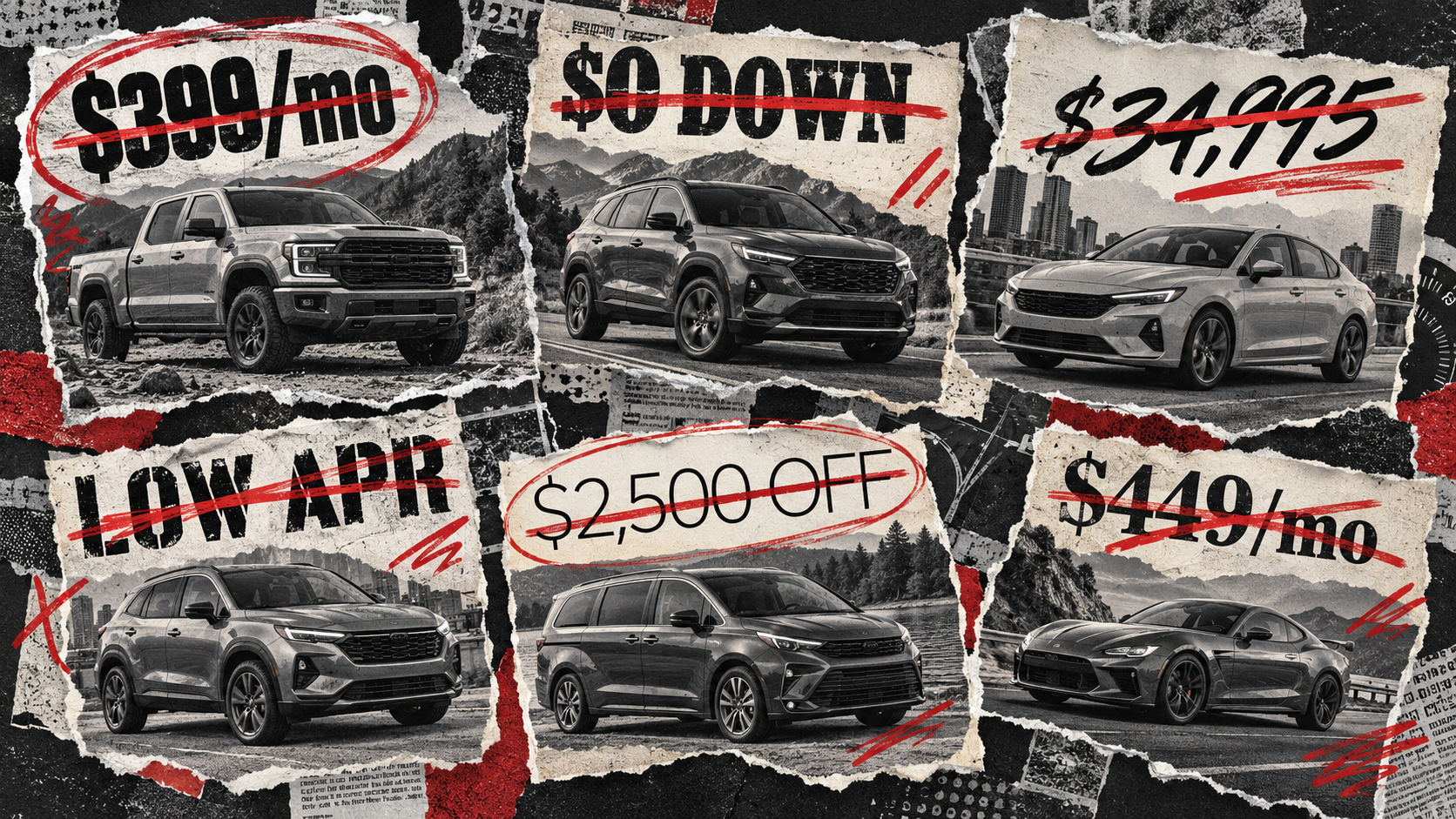
It compounds. The store down the road runs the same OEM offer, the same vehicle, and the same “Low APR, Huge Savings” headline. When every ad looks alike, the only reason to pick one store is the number. When the number gets worse everywhere at once, nobody has a reason to be chosen.
Stores that built trust hold up better. Their buyers shop them because they feel confident in the pricing, the process, and the people. A rate hike does not erase that confidence, nor does it change why those buyers came.
The Illegal Price Test
Here is an exercise we run with dealers. It takes ten minutes and it is uncomfortable in the best way.
Imagine that starting tomorrow, it is illegal to advertise the price of a vehicle. No payments, no APR, no dollars off, no “starting at.” How would you get buyers onto your showroom floor?
Now pull your last three ads and strip out every price reference. Look at what is left.
- Nothing is left. Your advertising has been renting attention one offer at a time. When the offer weakens, the attention goes with it.
- Only your logo and “huge savings” are left. You are advertising the brand and the category. Every same-brand competitor in your geo benefits as much as you do.
- A clear reason to choose your store is left. You have advertising equity. Every ad has been building on the last one, and a rate hike cannot take that away.
If you landed in the first two groups, the test just told you what to build. Strong creative answers three questions: why buy, why us, and why now. Price only answers the first. These elements pass the test:
- Your people. The salespeople, service advisors, and managers buyers come back to by name.
- Your process. A transparent, fast, respectful buying experience is worth advertising, especially when buyers are nervous about money.
- Your service reputation. An owner who trusts your service drive is your next buyer.
- What you add to the purchase. Included maintenance, free oil changes, extra warranty coverage, and purchase bonuses give buyers something to weigh besides the payment.
- Your community. The teams you sponsor and the causes you support make you a neighbor instead of a parking lot.
Price will come back into your ads. The test makes sure it is never the only thing in them.
What to run when rates rise
Lead with dollars off when incentive cash is rich. A rate hike does not automatically bring prices down, but incentive money follows inventory. When automakers or dealers sit on excess units, low APR and 0% offers tend to follow. When the cash is there, lead with the dollars off instead of the payment. A rebate stays the same size when rates climb. A payment does not.
Keep payments visible, and show the lease. Do not hide the monthly number. Buyers still in market need to know what to expect. A store that is upfront about payments earns trust fast. Give leasing a bigger role. TransUnion’s Satyan Merchant notes that leasing tends to create a lower monthly payment than financing the same vehicle, especially with loan rates where they are.
Stack value beyond the vehicle price. Maintenance plans, oil changes, warranty coverage, and purchase bonuses give a hesitant buyer a reason to act now that has nothing to do with the rate. Every offer must be accurate and compliant with your OEM and state advertising rules.
Build the message for the buyer the hike hits. Remember the 60-20-20 rule. Sixty percent of results come from reaching the right audience, 20% from the offer, and 20% from the creative. A first-time buyer in a credit-sensitive geo needs confidence and a clear path to approval. A conquest buyer coming from another brand needs a reason your store is worth the drive. One generic rate message reaches neither. That is why account planning starts with the buyer, not the offer.
Do not go dark. The slow-month reflex is to cut advertising, starting with anything that is not a direct offer. That is often when competitors pull back. The buyers who are waiting decide where they will shop when they return. Stay consistent, and keep telling them why they should choose your store. We covered this reflex in depth in how to navigate auto sales seasonality.
Two stores, same brand, same geos
Store A spent two years running OEM templates with all payment and no personality. Store B spent the same two years advertising its people, its no-games buying process, and the maintenance it includes with every sale.
Rates rise. Store A’s payment ads stop working, so it cuts spend and waits. Store B shifts the offer to incentive cash and lease payments while keeping everything else running. Six months later, the waiting buyers come back into the market. Most of them already know which store they trust.
The outcome
Rates will move again, up or down. The stores that dominate their markets do not depend on it. When buyers are ready, those dealers can say they are the first store buyers think of, whatever the payment looks like this month.
Take the Illegal Price Test this week. What is left in your ads is the part a rate hike cannot touch.

Chris Petrawski
President, Head of Ad Strategy at Bedford Advertising
Over a career spanning retail, automotive, and higher education, Chris has managed more than $500 million in advertising spend. His campaigns have earned a Gold Medal in the Educational Advertising Awards, multiple ADDY Awards, and a Best in Show TELLY Award, and his work has been featured by Facebook, Instagram, and the American Advertising Federation (AAF).
Chris also volunteers with Genesis Women’s Shelter, where he manages their Google Ads grant — work that earned him 1st Place in the AAF National Public Service Awards. In 2018, Ad 2 Dallas named him to its 32 Under 32, recognizing the top marketing and advertising professionals in DFW.
Since becoming President of Bedford Advertising in 2022, Chris has led franchise dealerships across the country in maximizing sales growth and profitability.